When you are the primary caregiver for an aging parent or a loved one living with a long-term illness, the shift toward allowing others to help can be surprisingly uncomfortable.
Even when support is desperately needed—and may even feel like a welcome relief from the enormity of caregiving—it can bring with it a whole new layer of vulnerability. After spending so much time making decisions, anticipating needs, watching closely, and carrying the responsibility of someone else’s well-being, trusting others to step in can feel like its own kind of letting go.
There is a particular kind of trust that comes with handing care over to someone else. You may know that your loved one is in capable hands, and yet still wonder: Will they notice the things I notice? Will they understand what matters? Will they recognize when something feels different? Will they care for this person with the same attentiveness that I have?
Those questions don’t necessarily mean that you don’t trust the people around you. Sometimes they simply mean that you have been doing this for a very long time.
Trusting the unseen parts of a care team is a practice. It takes time, communication, and grace. It means learning to express your concerns and your hopes, while also allowing others the opportunity to understand this very unique phase of life. It means recognizing that asking for help doesn’t diminish the love or commitment you have given your loved one. In many ways, it is an extension of that love. And perhaps one of the hardest parts is remembering that you are more than the role of caregiver.
When you have been operating under so many demands, often in a state of survival mode, stepping out of that role doesn’t automatically mean your nervous system knows how to relax. Even when someone else begins carrying some of the responsibility, you may still feel as though you need to be watching, anticipating, and preparing for what comes next. Coming out of survival takes time.
There is a recalibration that happens when you finally have room to breathe again. You may need to rediscover what it feels like to receive rather than constantly give, to trust rather than monitor, and to allow other people to become part of the support system that you have been carrying almost entirely on your own.
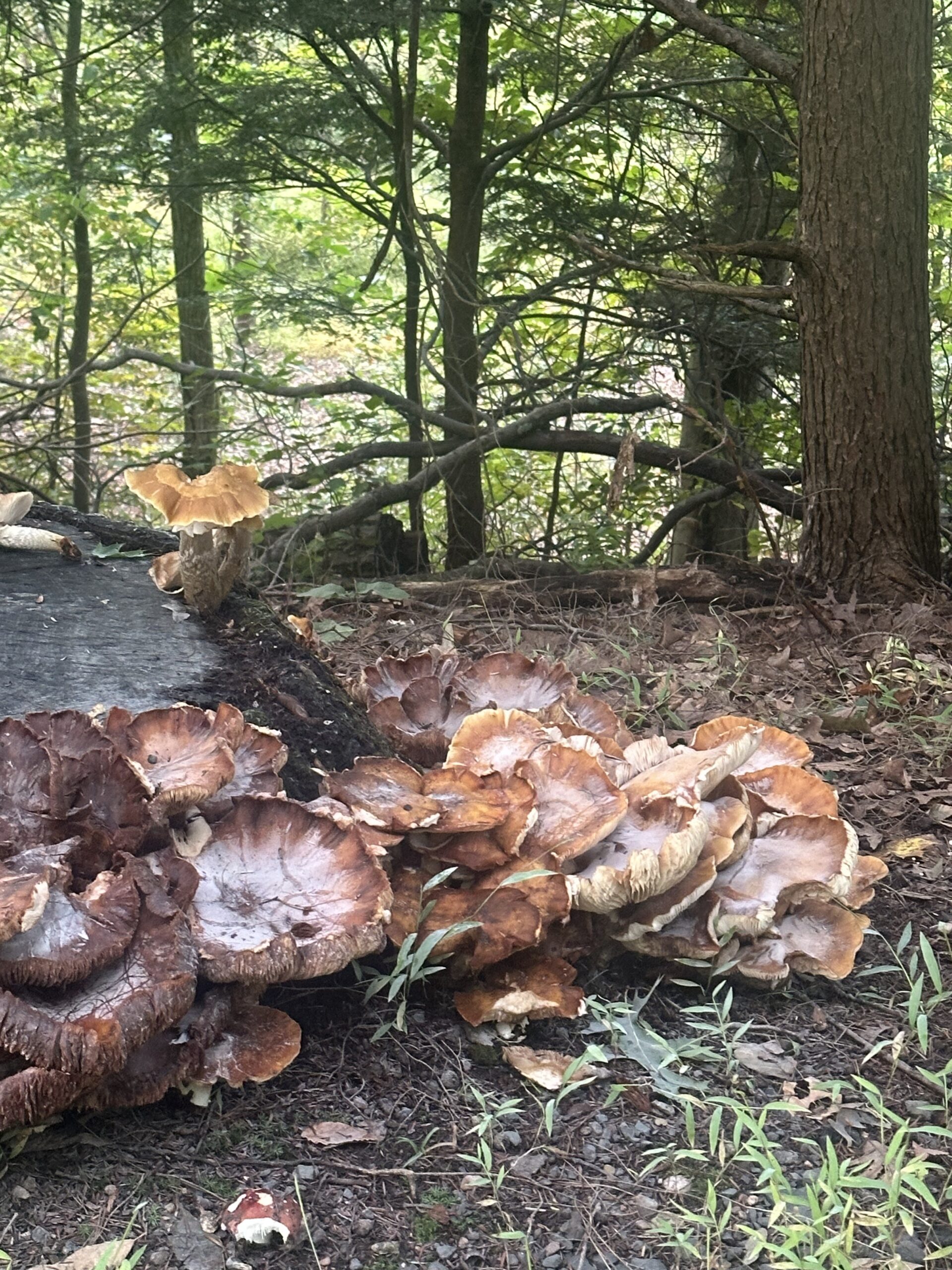
Recently, we came across a large cluster of mushrooms growing from the trunk of a tree in the woods. At first glance, they appeared almost delicate: small, quiet growths emerging from something that looked old and weathered. But beneath the surface, mushrooms are part of something much larger. They remind us that not all support is visible. Mushrooms are deeply connected to the networks beneath the forest floor, participating in an intricate exchange of nutrients and resources. What we see above the ground is only a small part of the story. That is why this felt like such a fitting message for caregivers.
You do not have to carry everything yourself. There is support all around you, some of which you might not be able to see yet.
Caregiving can become isolating. The responsibilities can become so consuming that it is easy to forget that you are part of a larger community of people who can help hold what has become too heavy to carry alone.
Sometimes that support comes through family or friends. Sometimes it comes through professional caregivers, doctors, nurses, neighbors, or people who have walked a similar path. It can arrive in unexpected ways, through a conversation, a moment of understanding, or someone who says, I see what you are carrying. There is power in that unseen network.
The mushrooms also remind us about resilience and interconnectedness. Their growth is not separate from the environment around them; it is tied to the larger ecosystem. In much the same way, our own growth and healing are often connected to the relationships that sustain us. This can be another message here for the caregiver: your personal growth does not have to happen in isolation.
There may even be wisdom in the way mushrooms transform what is old and decaying into nutrients that support new life. What has been difficult does not have to become meaningless simply because it was difficult. The long nights. The uncertainty. The exhaustion. The lessons learned through watching someone you love age or become ill. The moments when you weren’t sure you could keep going. Those experiences become part of you. Not necessarily as burdens you have to carry forever, but as compost for what comes next.
We can take what we have learned from difficult seasons and allow those lessons to nourish a new chapter. We can become more compassionate with ourselves. Recognize our own limits and learn that strength doesn’t always mean doing more. Strength means knowing when to lean into the support that is already there.
A beautiful balance in the mushroom’s message: Remain rooted in your truth while staying flexible enough to move with life’s changes.
Caregiving often requires constant adaptation. Plans change. Needs change. Roles change. The person you once cared for in one way may eventually need something entirely different. You may discover that the way you care for yourself needs to change, too. Let this be invitation not to know exactly what comes next, but to trust that you don’t have to navigate it all alone.
The next time you see mushrooms growing quietly in the woods, take a moment to look a little closer.
There are unseen networks beneath your feet. Just like there are people who may be willing to help. Receiving support does not make you less strong or less devoted. There is wisdom within you that has been quietly developing through everything you have experienced. Like the mushrooms, you are part of something larger than what can be seen on the surface. The next stage of growth begins not with doing more, but with allowing yourself to be supported.
We are co-founders & authors of Just Be The Journey, sharing our wisdom of the heart. Cultivating authentic leadership in business, entrepreneurship, and life. Storyhealing(TM) is one of the many tools we’ve created to inspire a community of like-minded individuals going through similar experiences, seeking connection, healing, and growth. Find more authentically created products by searching Adrienne Gervais & Liz Kametz on Amazon.